Bismuth ferrite is one of the most promising candidates for energy-efficient spintronics devices. What makes it special is its room-temperature multiferroicity. With the help of Scanning NV Magnetometry, the team led by Dr. Vincent Garcia (CNRS/Thales) unveiled multiferroicity mechanisms to enable further steps toward electrically controlled antiferromagnetic spintronics.
Using anisotropic in-plane strain in (111)-oriented BiFeO3 thin films, researchers stabilized a single-domain ferroelectric and antiferromagnetic state. In this single-domain multiferroic state, the team established the thickness limit of the coexisting electric and magnetic orders and directly visualized the suppression of the spin cycloid induced by the magnetoelectric interaction below the ultrathin limit of 1.4 nm.
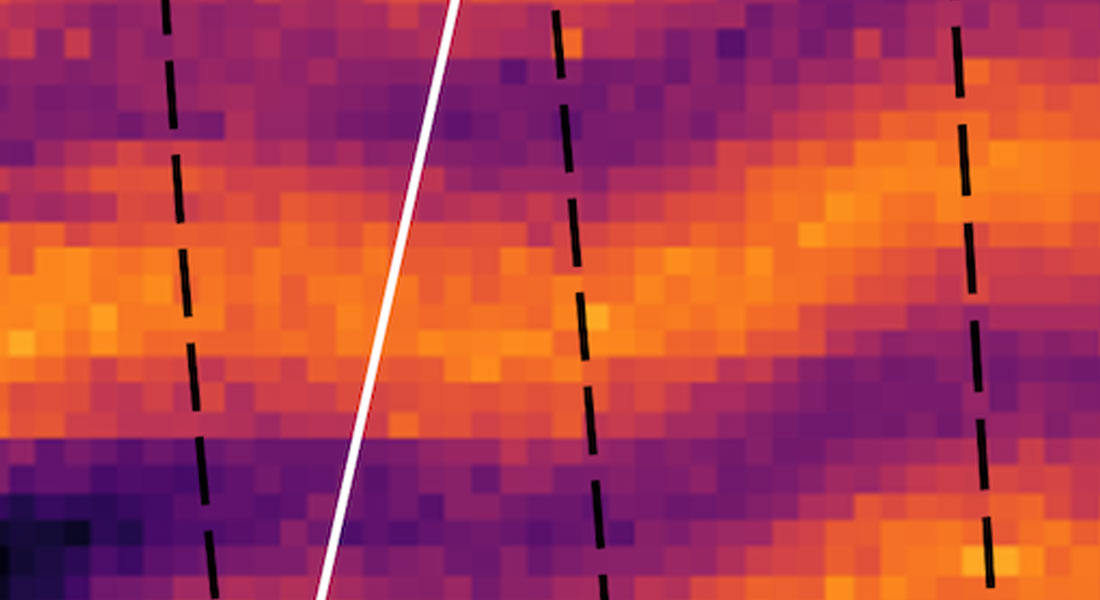
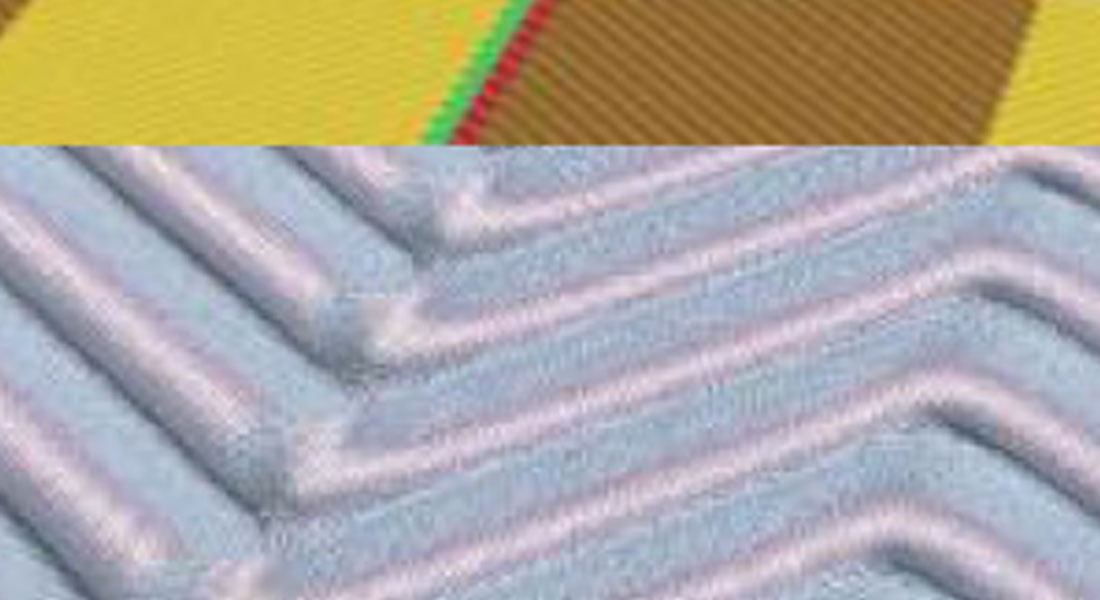
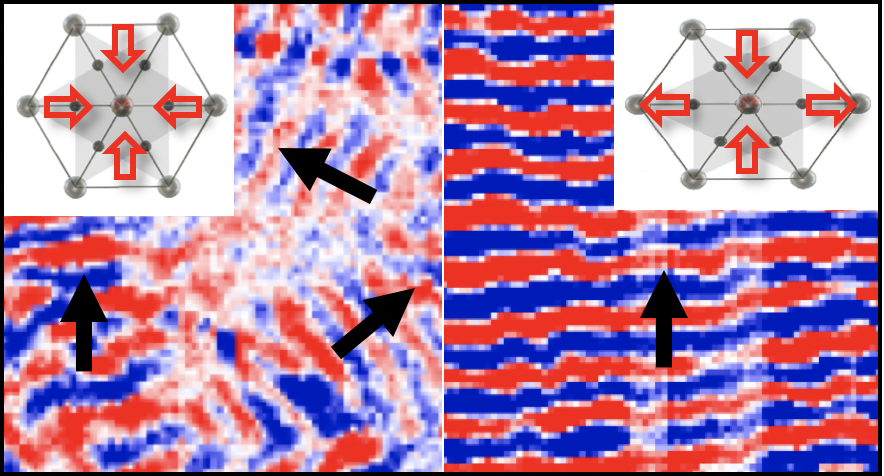
The team studied the effect of strain on the multiferroicity by growing BFO thin films on various substrates. Imaging the samples with ProteusQ, researchers observed the typical zig-zag pattern of anti-collinear spin cycloids on BFO thin films grown on STO. When the BFO was grown on a DSO substrate which causes an anisotropic in-plane strain on the BFO, a single spin cycloid state would appear in the magnetic map.
Once stabilized the single ferroelectric single spin-cycloid state, researchers performed Scanning NV Magnetometry measurements for samples with different BFO thickness. Thanks to the high sensitivity and spatial resolution of ProteusQ equipped with Quantilever MX tips, the team was able to directly visualize the suppression of the spin cycloid induced by the magnetoelectric interaction below the 1.4nm thickness.
If you want to dive deeper, check out directly Dufour et al. paper published in Nano Letters on September 2023. The collaboration led by Dr. Garcia is among our early adopters and Qnami is happy to see such scientific results enabled by our technology.