A quantum technology for device Failure analysis

Image credit: https://static.asminternational.org/edfa/202202/30/

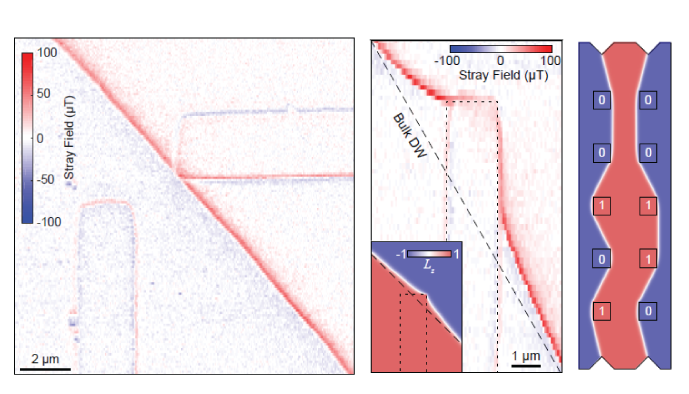
Scanning Nitrogen-Vacancy Magnetometry (SNVM) is emerging as a powerful tool for advanced electronic device failure analysis. This technique enables high-resolution, localized sensing of key parameters such as current flow, temperature variations, minute magnetic fields, and AC fields, providing valuable insights into device performance and defects.

As semiconductor technologies continue to scale, traditional failure analysis methods face limitations in resolution and sensitivity. SNVM overcomes these challenges by leveraging quantum sensing principles, offering non-invasive, nanoscale diagnostics for modern electronic components.

With its versatility and precision, SNVM is poised to become an essential technique for future failure analysis, enhancing the reliability and efficiency of next-generation electronic devices.

Read the introductory article published in the Journal of the Electronic Device Failure Analysis Society.

See more applications

Nanoscale mechanics of domain walls

Scanning NV Magnetometry unveiled for the first time the nanoscale mechanics of antiferromagnetic domain walls opening new avenues for antiferromagnetic spintronics.

AI Reconstruction of Magnetic Field Sources

Artificial intelligence improves magnetization map reconstruction from NV stray-field images.

Exotic antiferromagnetic spin cycloids in bismuth ferrite thin films

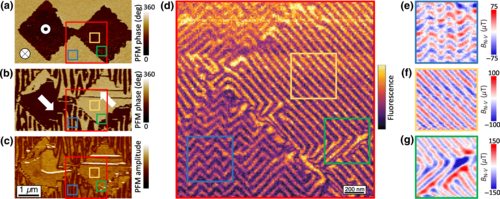
Scanning NV Magnetometry unlocks the characterization of the effects of strain and electrical fields on exotic antiferromagnetic spin textures in multiferroics.

Want to know more?

Talk to us - our Application Scientist is happy to talk with you about what you can do with our Scanning NV Magnetometer ProteusQ.
We are using cookies and analytics tools to give you the best digital experience.
AcceptPrivacy Settings

GDPR

  • Cookie Consent

Cookie Consent

We are using cookies and analytics tools to give you the best digital experience.  Find more information and details about how to switch them off in our Terms of Website Use and Privacy Policy.